


Page 168 - Volt Elevate The World Around Us Book 4
P. 168
Reduce


            The second step is to reduce the amount of waste we
            produce. We can achieve this by using only what is necessary
            and avoiding overconsumption. For example, we can reduce
            food waste by cooking only the amount we need, reduce

            electricity waste by switching off lights and fans when not in
            use, and reduce water waste by turning off taps properly. We
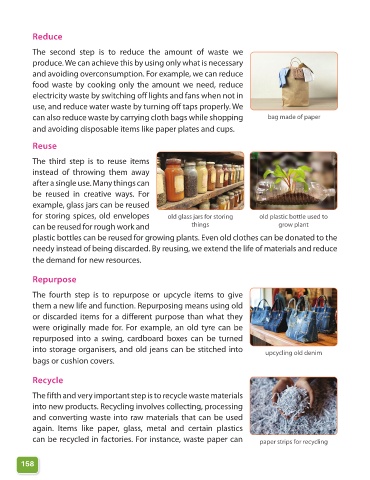
            can also reduce waste by carrying cloth bags while shopping                   bag made of paper

            and avoiding disposable items like paper plates and cups.

            Reuse

            The third step is to reuse items
            instead of throwing them away

            after a single use. Many things can
            be reused in creative ways. For
            example, glass jars can be reused
            for storing spices, old envelopes            old glass jars for storing    old plastic bottle used to

            can be reused for rough work and                    things                       grow plant
            plastic bottles can be reused for growing plants. Even old clothes can be donated to the
            needy instead of being discarded. By reusing, we extend the life of materials and reduce
            the demand for new resources.


            Repurpose


            The fourth step is to repurpose or upcycle items to give
            them a new life and function. Repurposing means using old
            or discarded items for a different purpose than what they
            were originally made for. For example, an old tyre can be

            repurposed into a swing, cardboard boxes can be turned
            into storage organisers, and old jeans can be stitched into                  upcycling old denim
            bags or cushion covers.


            Recycle

            The fifth and very important step is to recycle waste materials

            into new products. Recycling involves collecting, processing
            and converting waste into raw materials that can be used
            again. Items like paper, glass, metal and certain plastics

            can be recycled in factories. For instance, waste paper can                paper strips for recycling


        158

